
What is a Self-Priming Pump? Working Principle, Material Selection and Troubleshooting
What is a Self-Priming Pump? Working Principle, Material Selection, and Troubleshooting
Author:JPZX
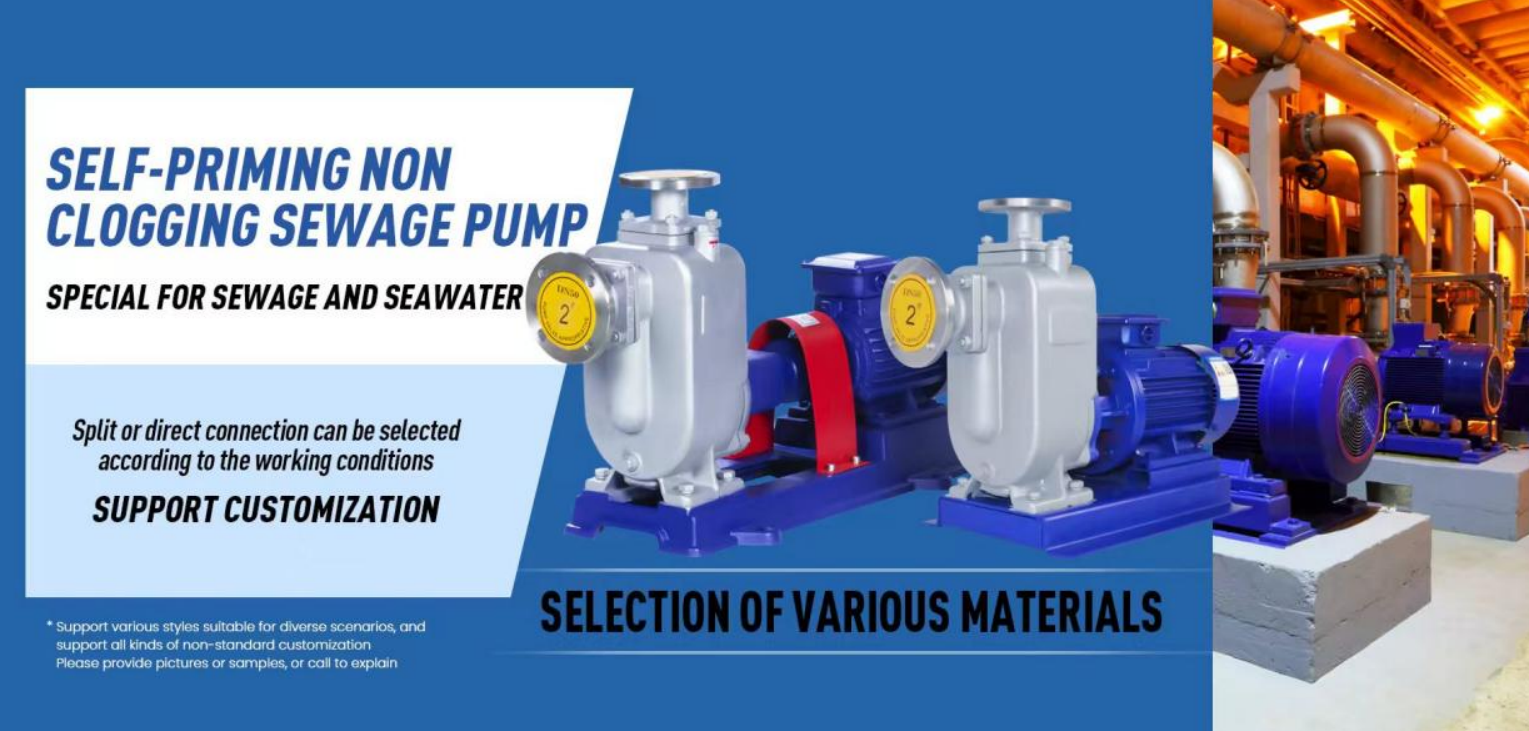
If you need to transfer liquid from a pit, sump, or underground basin, standard centrifugal pumps often fail due to air-binding. A self-priming pump solves this problem with a built-in liquid reservoir that automatically evacuates air from the suction pipe—eliminating the need for a foot valve or repeated manual priming.
In this technical guide, our engineering team breaks down how self-priming pumps work, how to select component materials for corrosive media, and how to troubleshoot common suction failures.
1. What is a Self-Priming Pump?
A self-priming pump is a centrifugal pump engineered to lift liquid upward from below-ground liquid sources.
Standard centrifugal pumps cannot move air; if air enters the suction line, the pump loses prime and stops delivering fluid. A self-priming pump overcomes this by retaining a small charge of liquid inside its casing from previous operation. Upon startup, this liquid creates an internal vacuum that purges air from the suction line and draws liquid up into the pump casing.
2. How Does a Self-Priming Pump Work?
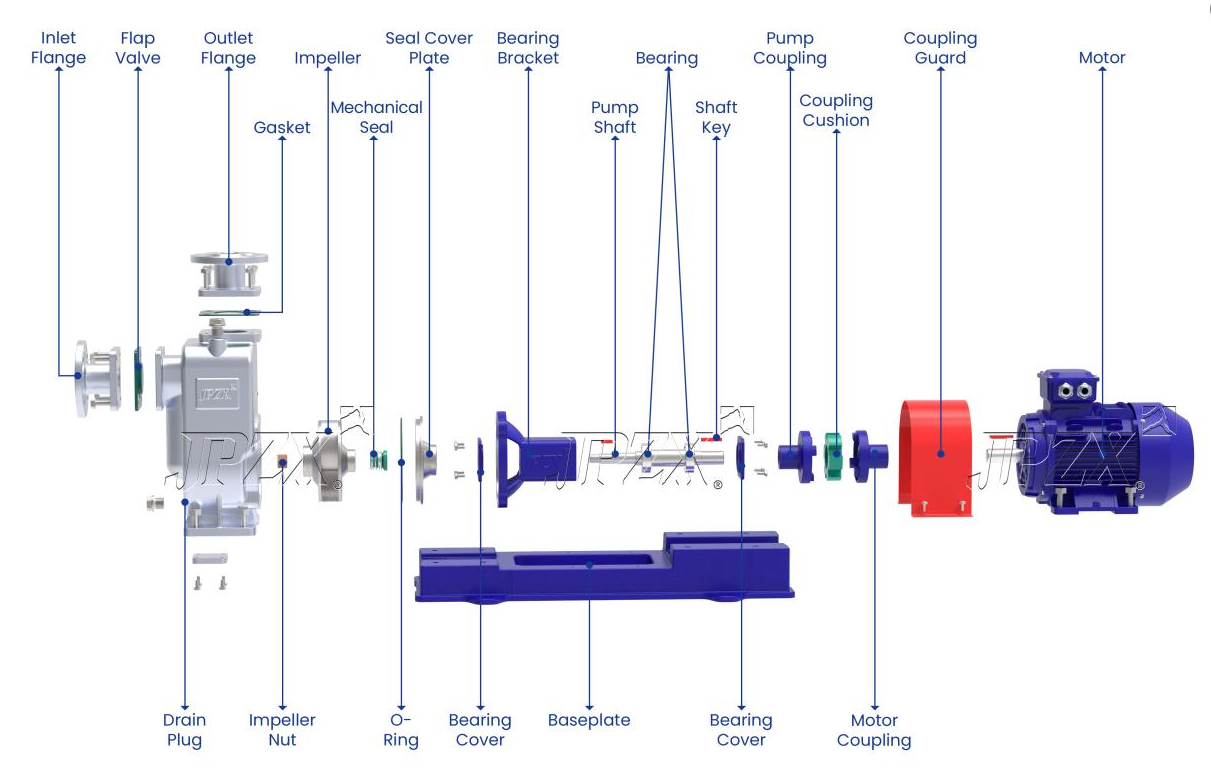
(JPZX Self-Priming Sewage Pump Structure & Exploded Component Diagram)
The operation consists of two distinct stages:
Phase 1: Air Evacuation (Priming Cycle)
- Internal Recirculation: When the motor starts, liquid stored in the casing flows into the impeller chamber.
- Air-Liquid Mixing: The rotating impeller mixes this fluid with air drawn from the suction line.
- Air Separation: The mixture enters the upper air-separation chamber. Air escapes through the discharge line, while the denser liquid falls back into the reservoir to continue purging air.
Phase 2: Standard Pumping Cycle
- Once all air is purged from the inlet pipe, atmospheric pressure forces liquid into the pump casing. An internal check valve closes the recirculation passage, allowing the pump to operate as a high-efficiency centrifugal unit.
3. Material Selection Guide for Different Liquids
Different fluids demand different metallurgy. Selecting the right pump material prevents chemical corrosion, reduces seal wear, and extends pump service life.
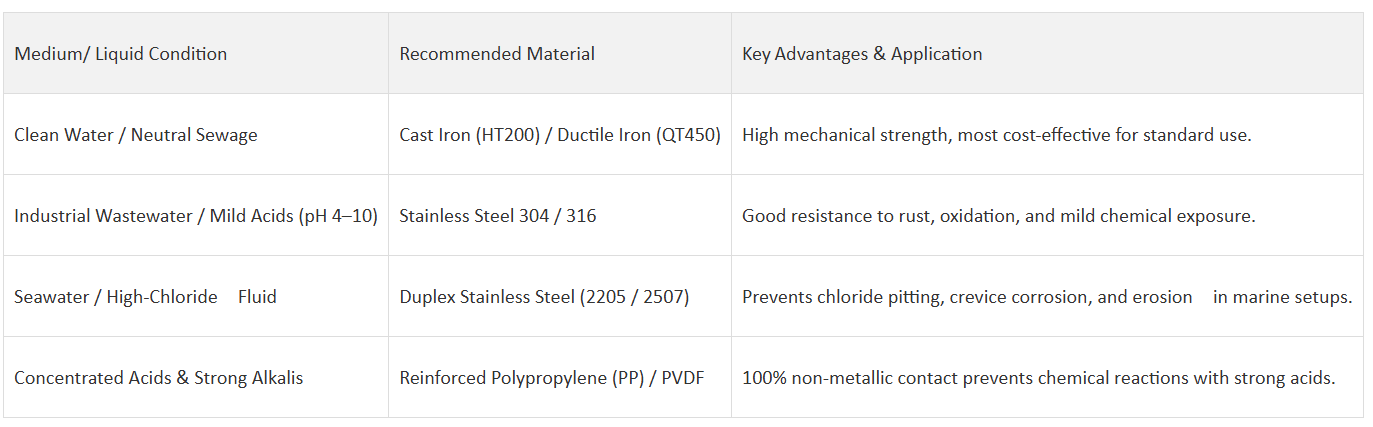
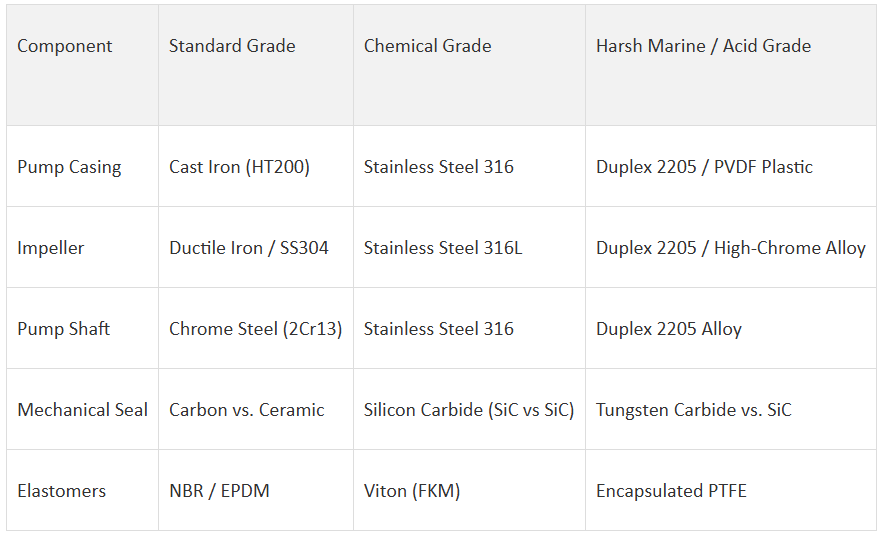
Component Metallurgy Matrix
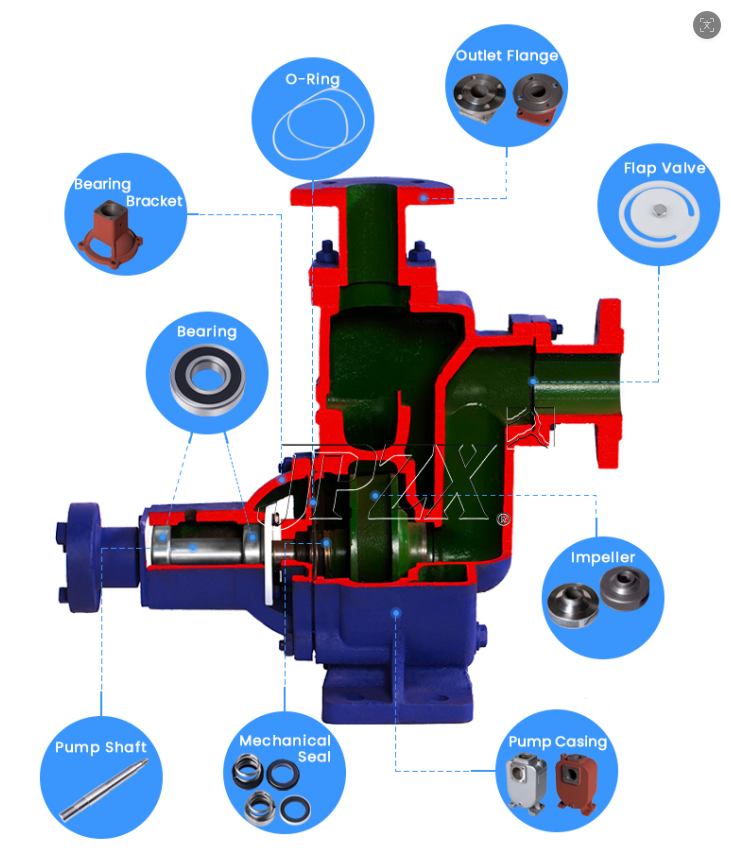
(Self-Priming Pump Internal Cutaway View & Metallurgy Components)
To ensure full compatibility across aggressive media, match individual pump components using the matrix below:
4. Frequently Asked Questions (FAQ)
Q1: Why is my self-priming pump failing to draw liquid?
Most suction failures occur due to four main reasons:
Air Leaks in the Suction Pipe: Even tiny air leaks in the inlet pipe prevent the pump from generating a sufficient vacuum.
Empty Pump Casing: You must pre-fill the pump casing with fluid before the initial startup.
Exceeding Suction Lift Limits: Without auxiliary systems, standard self-priming pumps have a maximum practical suction lift limit of **5 meters (16.4 ft)** If your suction height exceeds 5 meters, you must add a vacuum-assist system or a priming tank.
Damaged Mechanical Seal: A worn seal allows air into the chamber, stopping the priming process.
Q2: Can a self-priming pump run dry?
Standard self-priming pumps require fluid in the casing to cool and lubricate the mechanical seal. Running completely dry generates intense friction heat, which will burn out the internal bearings and ruin the mechanical seal within minutes.
5. Conclusion & Engineering Support
Choosing between self-priming and standard non-self-priming pumps comes down to system layout, suction conditions, and maintenance accessibility. Whether you need a metal self-priming sewage pump (ZX/ZW series), an acid-resistant plastic pump (FPZ series), or a mobile diesel-driven trailer package, JPZX (Jiujiang Pump) provides direct factory engineering support and custom OEM manufacturing.
