Selection Comparison: Self-Priming Pump vs Vertical Submerged & Sump Pump
Selection Comparison: Self-Priming Pump vs Vertical Submerged & Sump Pump
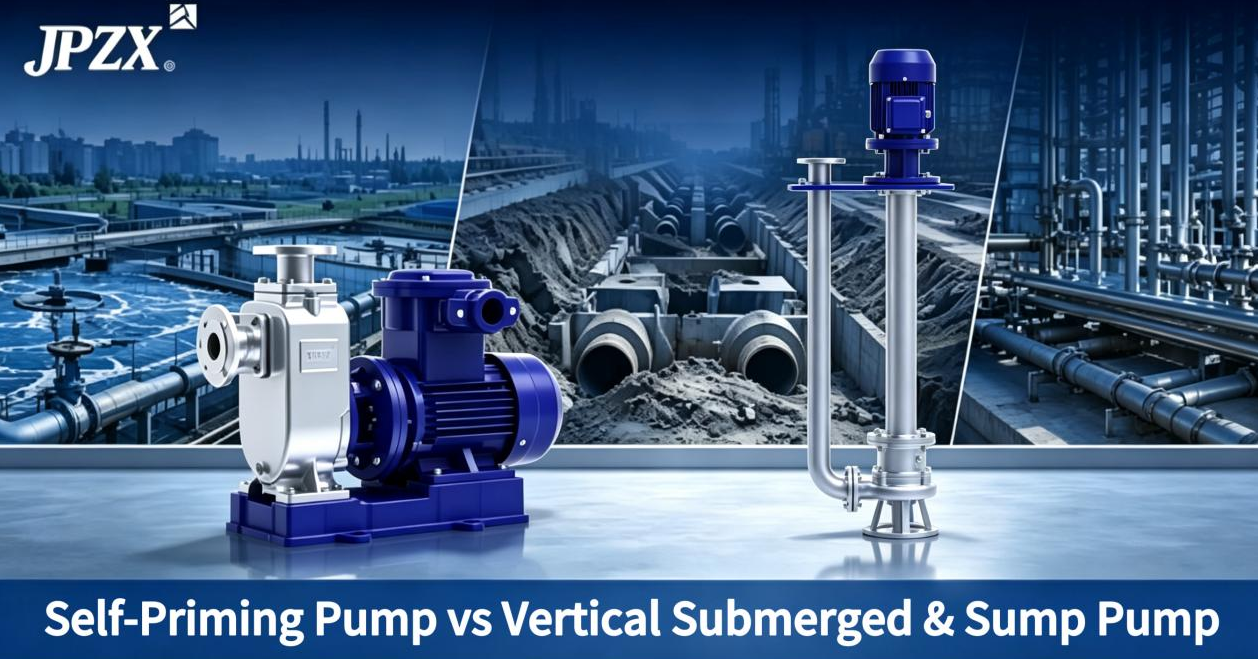
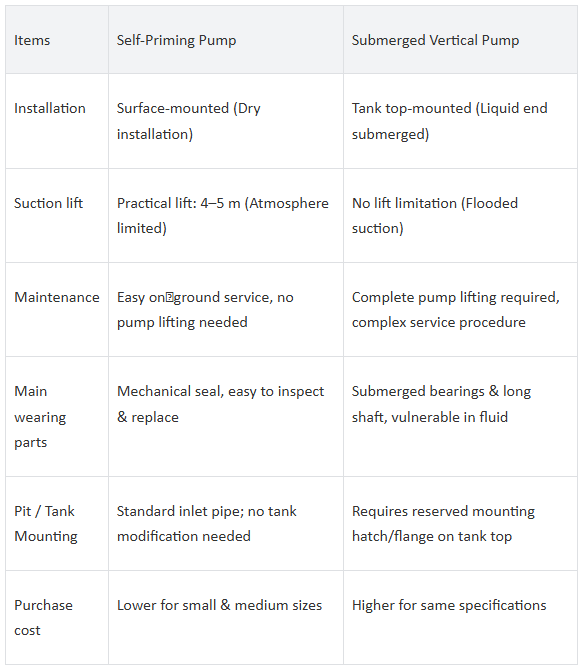
In chemical, electroplating, and wastewater treatment projects, self-priming pumps and submerged vertical pumps are two common solutions for transferring liquid from low-level tanks. Many buyers and engineers struggle to pick the right model. They differ greatly in installation, working principle, and maintenance requirements. Neither type is universally superior; suitability depends on site working conditions. This engineering guide provides a side-by-side comparison of working principles, installation specs, and maintenance limits to help you make an informed equipment selection.
Self-Priming Pump vs. Vertical Submerged Pump: Overview, Pros & Cons
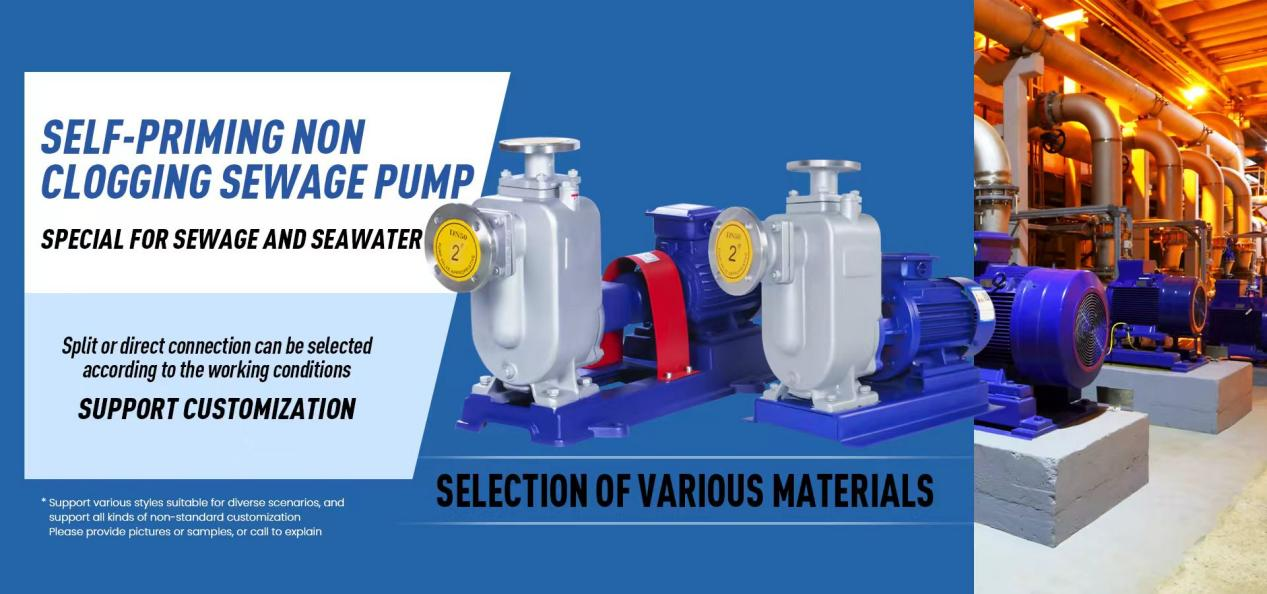
Self-Priming Pump
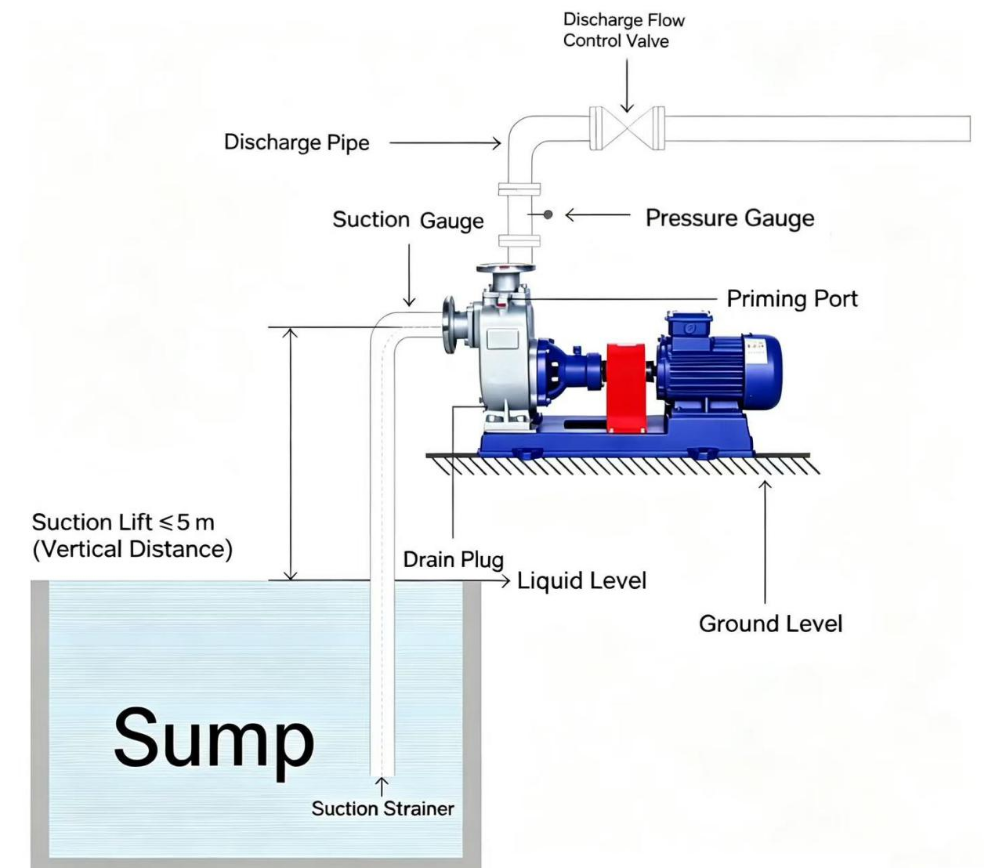
The complete pump assembly is surface-mounted above ground (dry installation). Some liquid remains inside the pump casing. As the impeller rotates, gas-liquid separation takes place and negative pressure is generated to draw liquid up from the tank.
Initial priming is only required before the first startup. Once filled, the casing retains fluid for subsequent automatic restarts, and a foot valve on suction pipe can be omitted.
Advantages
- All components are accessible on the ground. Wearing parts such as mechanical seals and impellers can be visually inspected. No tank draining or lifting equipment is required for seal or impeller replacement, making maintenance fast and easy.
- Available materials include cast iron, stainless steel, FRPP and PVDF. It handles wastewater, weak acid & corrosive liquid, and fits temporary transfer such as tank car unloading.
Limitations
- Limited by atmospheric pressure. Theoretical priming height is 7-8 m, while reliable practical priming height is recommended at 4-5 m. Excessive vertical drop will cause cavitation and unstable suction performance.
- Large amounts of hard solid particles will erode pump chamber and mechanical seal and shorten service life.
Submerged Vertical Pump
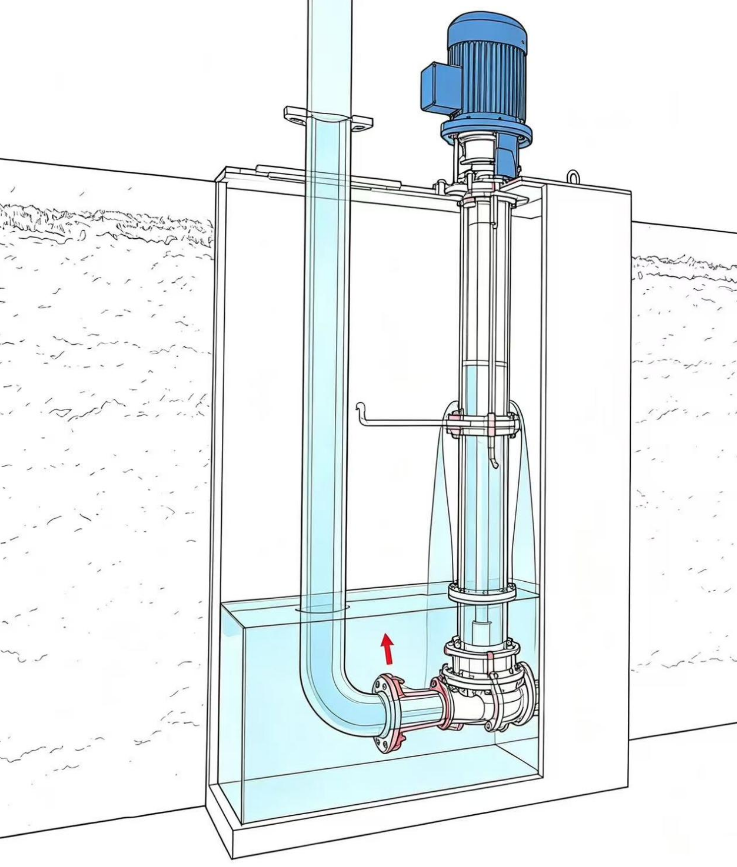
The drive motor remains above the tank cover, while the extended vertical column shaft lowers the pump casing and impeller into the liquid. under liquid via a long shaft. The pump head is always immersed in liquid, so the casing stays full of fluid. No priming is required and there is no suction-lift restriction. The pump works as long as the impeller is covered by liquid.
Advantages
- No suction-lift limitation, suitable for deep tanks. Stable performance even with large liquid-level fluctuation. Good for wastewater with sediment and solid particles.
Limitations
- Pump head and bearings work submerged in process fluid, leading to higher risk of corrosion and wear. Lifting the complete pump assembly is required for repair; sometimes tank draining is necessary. Maintenance workload and downtime increase.
- Long shaft may bring vibration issues. Safety risks exist when pumping volatile or flammable media, so long-shaft submerged pumps are restricted in many projects.
Selection Guidance:Which Pump Suits Your Project?
|
Operating Condition / Project Needs |
Recommended Pump Type |
Primary Technical Reason |
|
Suction Depth ≤ 4–5 m |
Self-Priming Pump |
Operates comfortably within standard atmospheric suction lift limits. |
|
Pit / Tank Depth > 5 m |
Submerged Vertical Pump |
Flooded suction eliminates suction lift limits and cavitation risks. |
|
No Top Hatch or Tank Modification Allowed |
Self-Priming Pump |
Dry surface installation requiring only an inlet suction pipe. |
|
High Solid Content, Sediment, or Slurry |
Submerged Vertical Pump |
Direct intake without clogging or eroding self-priming chambers. |
|
Frequent Maintenance & Easy Service Needed |
Self-Priming Pump |
Ground-level access; no overhead crane or tank draining required. |
|
Large Liquid-Level Fluctuations |
Submerged Vertical Pump |
Continuous operation as long as the impeller remains submerged. |
|
Tank-Car Unloading / Mobile Transfer |
Self-Priming Pump |
Flexible positioning and convenient temporary pipeline hookup. |
Important note: For volatile and flammable media, use long-shaft submerged pumps with caution. Self-priming pumps shall be evaluated first.
Purchase price should not be the only selection factor. Self-priming pumps feature simple maintenance but have suction-lift limits. Submerged vertical pumps overcome suction-lift restriction yet come with higher maintenance cost. Real-world projects shall evaluate tank depth, liquid-level variation, solid content, chemical corrosion and service conditions, to match pump type with working conditions and reduce unexpected downtime & repair loss.
FAQ
Q1: Do I need to add water every time I start the self-priming pump?
A: No. Priming water is only required for the first startup. No repeated water filling is needed for later operation, and a suction foot valve is not required, which greatly simplifies daily use.
Q2: Can submerged vertical pumps run dry?
A: Absolutely not. The submerged bearings rely on liquid for lubrication and heat dissipation. Dry running will cause rapid bearing wear, seal burnout and shaft damage. The impeller must be fully submerged during operation.
Q3: Why is my self-priming pump operating unstably or failing to prime?
A: Common reasons:
The actual suction height exceeds 5 meters (exceeds the equipment limit);
Air leakage from the suction pipeline;
Worn mechanical seal caused by excessive solid particles, leading to insufficient negative pressure. Solutions: lower the pump installation height, check pipeline tightness or replace the seal.
Q4: Which is more cost-effective for corrosive conditions?
A: For normal-temperature, weak acid and alkali conditions, FRPP/PVDF self-priming pumps are preferred due to low maintenance cost and easy operation. For high-temperature, strong corrosion and deep tank conditions, submerged pumps are applicable, but higher long-term maintenance costs should be considered.
Q5: Can submerged pumps transfer flammable and volatile liquid?
A: Not recommended. Long-shaft submerged pumps easily generate vibration and friction during operation, with potential sealing risks underwater. For flammable and volatile media, ground-mounted self-priming pumps are safer and more suitable.
Q6: Which pump has a longer service life?
A: Generally, self-priming pumps offer a longer and more predictable service life under identical working conditions. Because the entire pump assembly is surface-mounted, its primary wearing part—the mechanical seal—operates above liquid level and can be regularly inspected and maintained before major failures occur.
However, long-term durability ultimately depends on your specific application:
For Clean Water, Weak Acids, or Volatile Media: Self-priming pumps typically outlast vertical submerged pumps because they have less corrosion and easier routine servicing.
For Severe Slurries or Deep Pits (>5m): A heavy-duty vertical submerged pump may perform more reliably over time, as it avoids cavitation and suction lift stress, provided the line shaft bearings are adequately lubricated and maintained.
About Jiujiang Pump
For over 20 years, Jiujiang Pump has remained dedicated to researching, developing, and manufacturing self-priming pumps. It operates the Italian brand PWS and the Chinese brand JPZX to provide straightforward, reliable pumping equipment tailored to real-world industrial and municipal needs.
If you have questions about pump selection, technical specifications, or would like to request a quote for your project, please feel free to reach out to our team:
Inquire about PWS Products (Italian Brand Line):
Inquire about JPZX Products (Chinese Industrial Pump Line):
Our technical team is ready to assist you with model selection and project requirements.